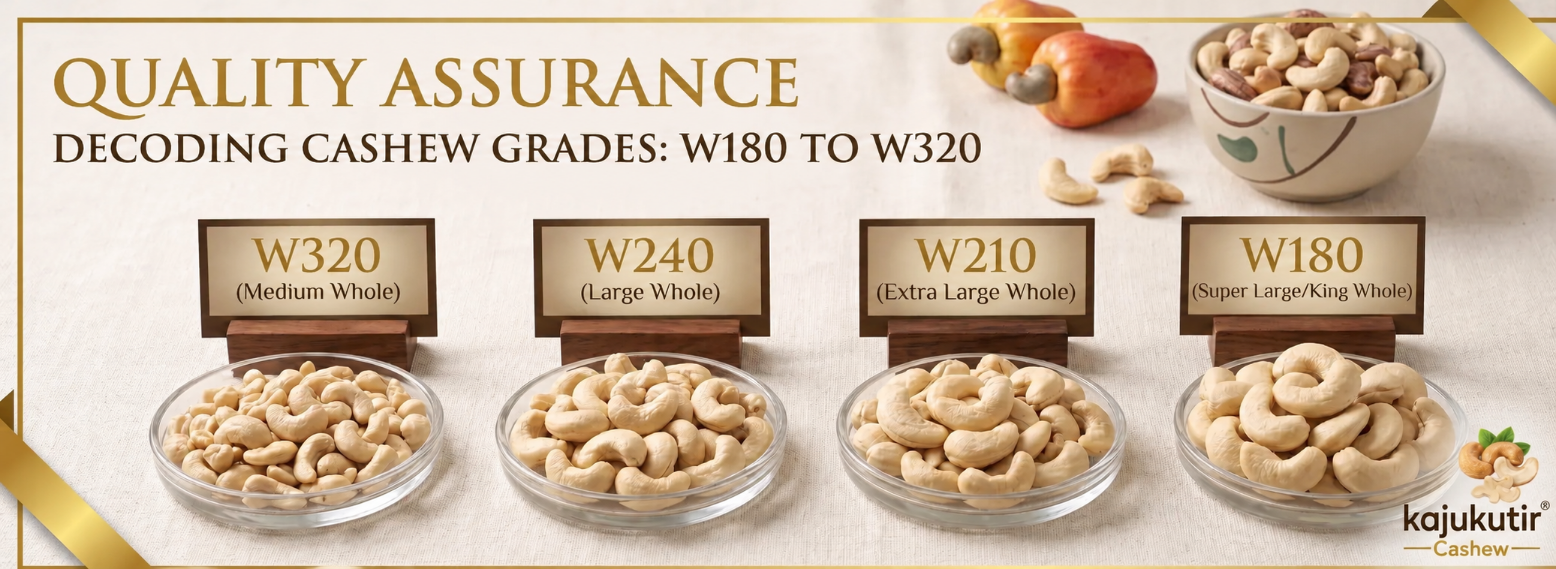
Cashews are among the most popular nuts worldwide, valued for their rich taste, creamy texture, and nutritional benefits. However, not all cashews are the same. If you have ever purchased cashews in bulk or explored the cashew industry, you may have come across terms such as W180, W210, W240, or W320.
These grades represent internationally recognized standards used to classify cashew kernels based on size, appearance, and quality. Understanding these grades can help buyers, retailers, and consumers make informed purchasing decisions.
What Does "W" Mean in Cashew Grades?
The letter "W" stands for White Whole, indicating that the cashew kernels are whole, unbroken, and naturally white or pale ivory in color.
The number following the "W" indicates the approximate number of kernels per pound (454 grams). Lower numbers represent larger kernels, while higher numbers indicate smaller kernels.
For example:
- W180 = Approximately 180 kernels per pound
- W210 = Approximately 210 kernels per pound
- W240 = Approximately 240 kernels per pound
- W320 = Approximately 320 kernels per pound
As the kernel size decreases, the count per pound increases.
Understanding Popular Cashew Grades
W180 – The King of Cashews
W180 is considered one of the most premium and largest cashew grades available in the market.
Features:
- Largest whole kernels
- Premium appearance
- Rich texture and taste
- Preferred for gifting and luxury packaging
Best Used For:
- Premium retail packs
- Corporate gifting
- Luxury food products
W210 – Premium Large Cashews
W210 kernels are slightly smaller than W180 but still fall into the premium category.
Features:
- Excellent size and appearance
- Attractive presentation
- High-quality whole kernels
Best Used For:
- Premium snacks
- Retail packaging
- Gourmet food applications
W240 – Popular Export Grade
W240 is widely regarded as a balance between size and affordability.
Features:
- Large kernels
- Consistent quality
- Good value for money
Best Used For:
- International exports
- Retail brands
- Food processing industries
W320 – The Most Popular Grade Worldwide
W320 is the most commonly traded cashew grade across global markets.
Features:
- Medium-sized kernels
- Excellent taste and texture
- Economical pricing
- High availability
Best Used For:
- Daily consumption
- Snack manufacturing
- Bakery and confectionery products
Why Cashew Grades Matter
Cashew grading helps maintain consistency and quality standards across the industry. Buyers can select the appropriate grade based on their specific requirements, whether they prioritize appearance, size, affordability, or processing needs.
Key factors considered during grading include:
- Kernel size
- Color and appearance
- Whole or broken kernels
- Moisture content
- Overall quality standards
Which Cashew Grade Should You Choose?
Choosing the right grade depends on your purpose:
| Grade | Size | Quality Level | Ideal For |
|---|---|---|---|
| W180 | Extra Large | Premium | Luxury Packaging & Gifting |
| W210 | Large | Premium | Retail & Gourmet Products |
| W240 | Medium-Large | High Quality | Exports & Retail |
| W320 | Medium | Standard Premium | Everyday Consumption |
Conclusion
Understanding cashew grades is essential for making informed purchasing decisions. While W180 and W210 are premium choices known for their larger size and luxurious appeal, W240 offers excellent value, and W320 remains the most popular grade globally due to its balance of quality and affordability.
Whether you are a retailer, distributor, food manufacturer, or casual consumer, knowing the difference between W180, W210, W240, and W320 helps ensure you choose the right cashew grade for your specific needs.